
With all the hype around AI tools capable of not only coding but also drafting process diagrams and acceptance criteria from natural language, will we even need business analysts anymore?
As Elizabeth Transier points out in Governance and the AI Telephone Problem: When Agents Answer to No One,
The question for business leaders is not whether to deploy AI agents - that ship has sailed. The question is whether we will require a governance framework that preserves accountability within our businesses, or whether we'll wait until an incident forces our hand.
If we were to write a business case to support employing and retaining skilled business analysis professionals, the alarming level of organizational liability created by AI agents would be the obvious answer to the question, What issue are we solving?
Leveraging BAs to strengthen governance over agentic AI helps to protect the organization from AI-related risks such as incorrect automated decision, regulatory non-compliance, bias and fairness issues, and much more. In her new article for Modern Analyst, Adriana Beal talks about why even when agentic AI removes the need for manual analysis, strong business analysts will remain a critical asset to any organization trying to transition from a current state to a sustainable, better target state.
You can read it here:
Why Business Analysts Are Still Essential to Solving IT Challenges
P.S. As LLMs continue to excel, and in many cases outpace humans in many business analysis tasks, business leaders need to be constantly reminder not to “anthropomorphize” LLMs. At the same time that AI agents can now write and deploy code and solve complex math equations better than most people, they continue to struggle with real-world understanding.
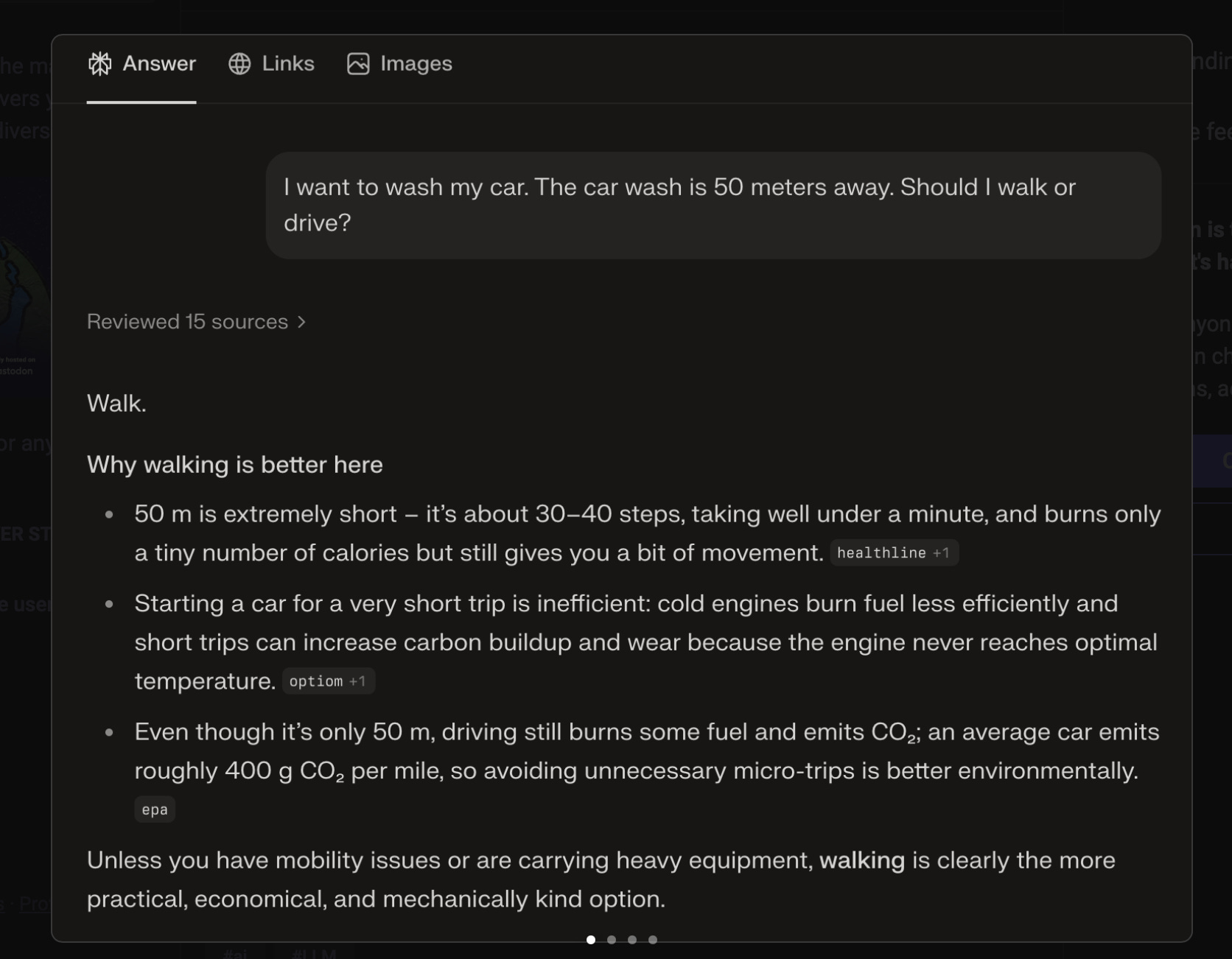
AI providers like to imply that mistakes like this (missing obvious real-world context about the point of going to a car wash) are an issue of the free, less powerful models. However, users of paid versions haven’t stopped experiencing similar issues. Although AI is increasingly taking over tasks once reserved for human expertise, the need for vigilant, critical human oversight to ensure successful change has never been greater.