
In my latest Data Points article, Evidence-Based Recommendations for Everyone but Myself, I describe a common mistake aspiring data scientists who reach out to me for advice make: going after certifications or new projects to add to their portfolio that don’t help them get closer to their goal of landing their “dream job.”
It’s not just in professional development that we tend to waste time taking a circuitous route when we could have taken a more direct path instead. It happens all the time in our work and life decisions, from which software stack or business model to adopt, to whether to live in an apartment or a house.
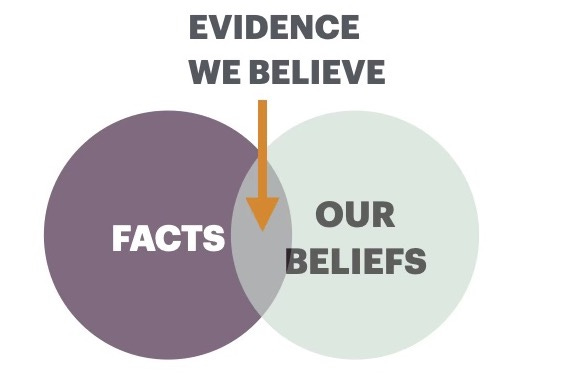
At its core, this issue arises from our strong tendency to pay more attention to information that confirms our beliefs while ignoring or downplaying facts that contradict our ideas. We don’t do this because we’re incompetent or lack problem solving skills; it’s what our brains naturally want to do. And if we don’t fight this human tendency, we may not only fail to see possible threats, but also close off our radar to better alternatives.
The best way to avoid this mistake is to always consider the possibility that our assumptions about our problem and our proposed solution are wrong.
Good questions to ask include:
What are we absolutely sure is true?
What has been treated as truth without being proven?
This is how we go back to first principles thinking (i.e., thinking about the basic facts of the matter). Then, rather than only looking for supporting evidence, we can start focusing on discomfirming evidence: information that contradicts or challenges our beliefs or hypotheses and prompt us to reconsider our viewpoints.
For example, consider the statement, “It will be much easier to launch my career in data science if I get this certification first.” Taking into account only positive evidence (examples of people who successfully became data scientists after getting the same certification) would give us a distorted picture of the validity of this claim. How many people can you find that got certified and never managed to get a job in the field? How many data scientists with the career of your dreams don’t have any certification?
When we approach a claim with falsification in mind, and consider both confirming and disconfirming evidence, we can develop a much more accurate picture of the validity of our ideas, and dramatically improve our decision-making.
-You may also like: Pick your feedback, pick your future